Understand the sample
Booclarke’s sample: online level-20 PvE characters, September 20–27, scanned daily 6–9 pm server time. /who may undercount, especially Undead Paladins. Region and time zone are unspecified.
Observed class counts
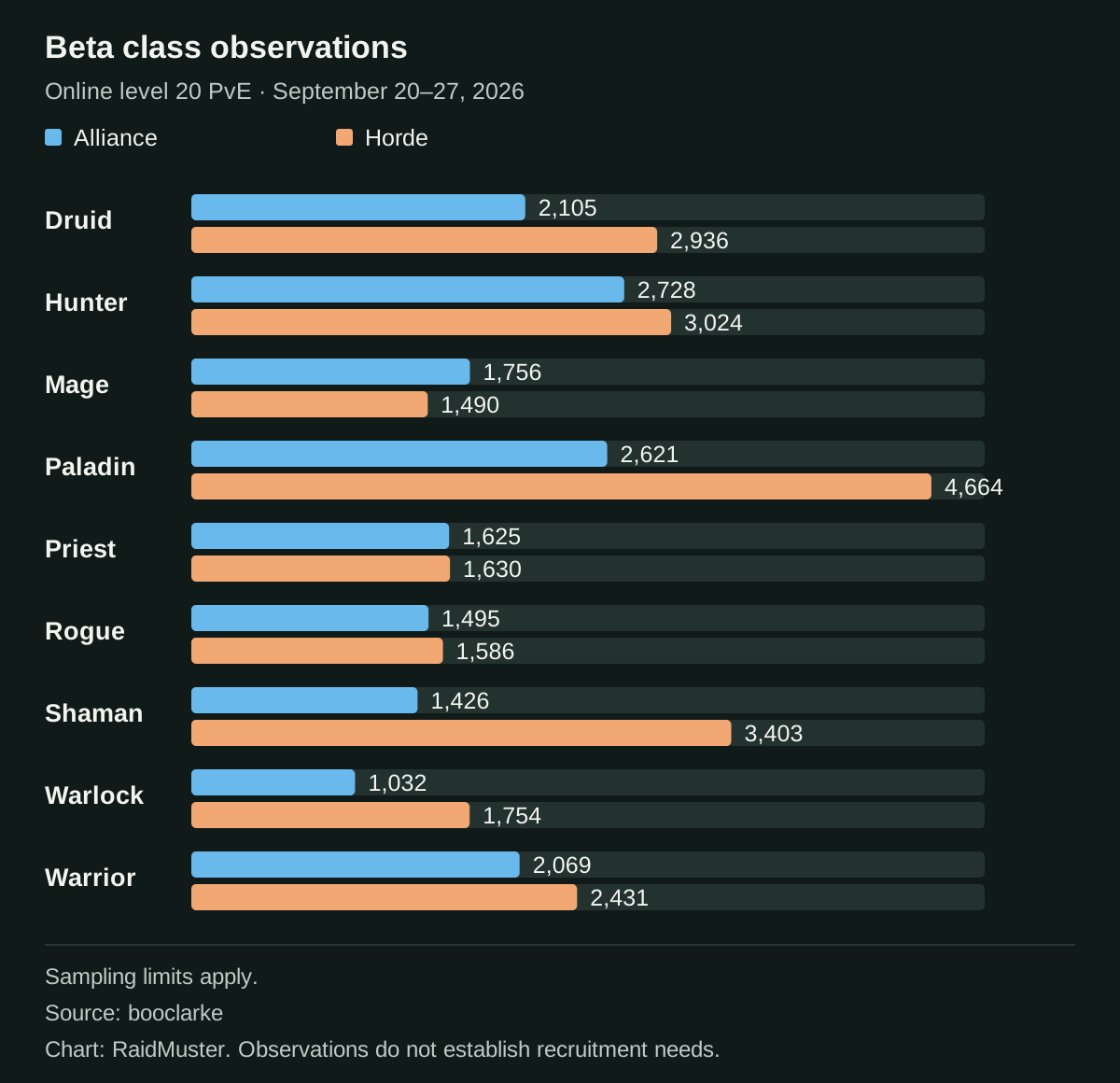
| Class | Alliance | Horde |
|---|---|---|
| Druid | 2,105 | 2,936 |
| Hunter | 2,728 | 3,024 |
| Mage | 1,756 | 1,490 |
| Paladin | 2,621 | 4,664 |
| Priest | 1,625 | 1,630 |
| Rogue | 1,495 | 1,586 |
| Shaman | 1,426 | 3,403 |
| Warlock | 1,032 | 1,754 |
| Warrior | 2,069 | 2,431 |
Does a beta class census prove a recruitment shortage?
No. A count of characters seen online cannot tell you how many people want a guild place on your chosen evening. A character may belong to somebody already committed elsewhere, somebody testing an alternative class or somebody whose schedule never overlaps yours. The observation does not include those answers.
Use the census as a prompt for questions about your applicants. If officers become concerned about finding a particular class, check how many compatible applicants you have actually heard from and what each wants to play. A small class count is not evidence that every guild needs that class; a large count is not a reason to reject a good applicant.
Treat a character’s role as another unanswered question. Seeing a class does not establish whether its player plans to tank, heal or deal damage. Ask that directly before using the entry in your guild roster plan.
New sightings are not new accounts or retention
The method defines new as previously unseen, returning as already recorded; daily tracking started September 22.
That distinction prevents two misleading conclusions. An established character first captured today can appear as new. A previously observed character absent from the next scan has not necessarily stopped playing. Without account-level activity and complete observation, these categories cannot establish subscription growth, churn or the number of separate people playing.
For the same reason, do not sum daily sightings and call the result unique players. Repeat appearances and multiple characters create different counting questions. Keep each chart’s definition attached when discussing it with officers.
Turn population interest into a useful guild check
Instead of changing recruitment around the biggest bar, review your own open places. For each applicant, record the intended main, preferred role, usual availability and whether the choice is confirmed for launch or still a beta experiment. Keep one person’s alternatives together so they do not become several assumed attendees.
Then compare those commitments with one dated session. If the missing cover is a healer on Wednesday, write that in your recruitment note. A broad request for an allegedly rare class may attract players who want another role or cannot attend that evening.
Use the free guild roster template for your availability check. It does not import this census or discover applicants. Ask members to confirm the plan again after trying a different class; their answer is better evidence for your roster than a population estimate.
What would make the next census more informative?
Look for consistent observation hours, comparable level restrictions and an explanation of changes to the collector. A different sampling window can change the people encountered without demonstrating a broader popularity shift. Record those method changes beside any comparison you share.
Our recommendation is to keep two separate notes: what the community sample observed and what your own members committed to. Revisit the first as new evidence appears; use the second to decide whom your guild needs to recruit today.