What emerged overnight
A 19 September community transcript links to Senior Game Producer Tom Ellis’s explanation of the beta’s opening server problems. We could read the transcript, but could not independently load the original X post. The fresh item is this overnight discussion of the explanation; the incidents themselves occurred during the beta opening.
The account describes three separate problems: login-service rate limiting, slow database operations affecting actions such as looting, and game servers retaining empty maps. It says engineers increased connection capacity, refreshed database statistics and deployed a fix requiring restarts. Those reported interventions explain the earlier disruption; they are not a live server-status guarantee.
The practical implication for a WoW guild organiser is to record where each member is stuck before changing the session plan. A queue, a delayed in-game action and a client crash need different follow-up.
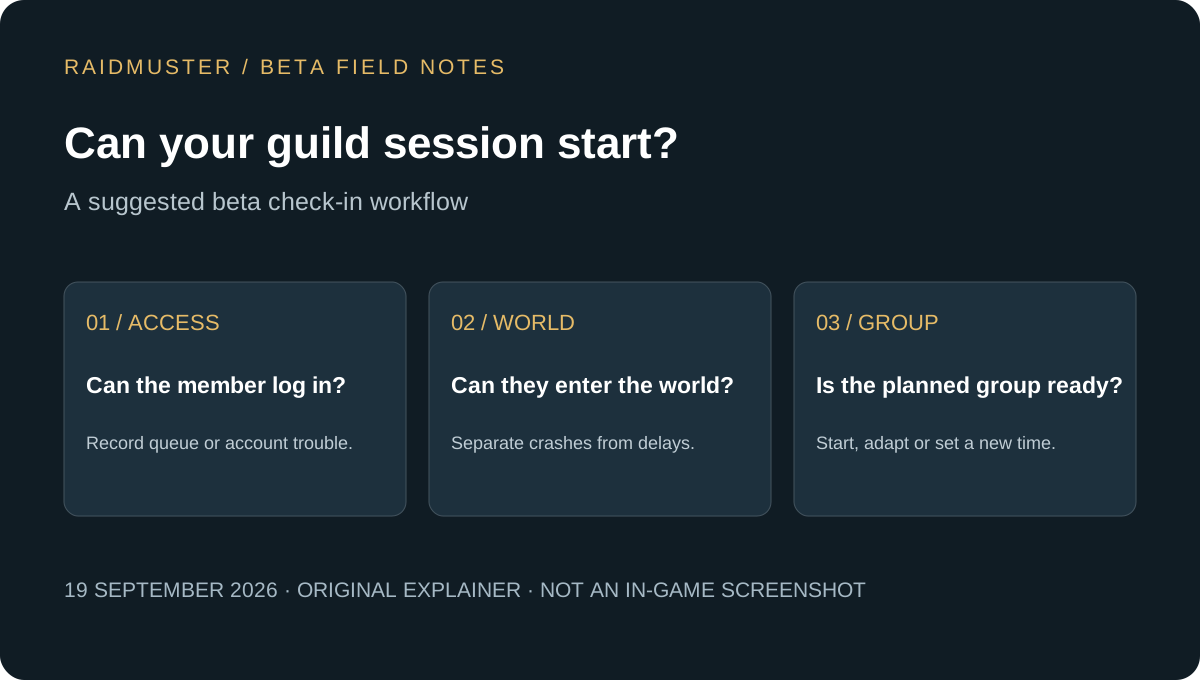
Identify the stage before trying a fix
A report that “the game does not work” is difficult to act on. Ask for the stage and the time of the failure. This is a triage checklist for the organiser, not a diagnosis of every disconnect.
| What the member sees | Useful next step |
|---|---|
| Still waiting to log in | Keep their place provisional and agree the next check-in time. |
| In the world, but actions are delayed | Record the affected action, time and whether other members see it. |
| Client closes or freezes | Use the crash guide and preserve the error text. |
| A second login removes the first player | Check the account-selector report before treating it as general server load. |
A 30-minute fallback plan for guild leaders
Choose one organiser to collect readiness updates. Fifteen minutes before the intended start, ask members whether they can enter the world and whether they are available for the full session. Keep “available but unable to connect” separate from “not attending”. That distinction matters when you review attendance later.
At the start time, set a short grace period the group has agreed in advance—for example, ten minutes. If the required roles are still missing, switch to a smaller activity that the connected members can actually do, or postpone. Avoid promising a dungeon start time while its participants are still outside the client.
Thirty minutes after the original start, close the loop with the waiting members. Tell them whether the session is running, has changed or is cancelled. These timings are our suggested workflow, not Blizzard queue estimates.
Keep the WoW guild roster useful during disruption
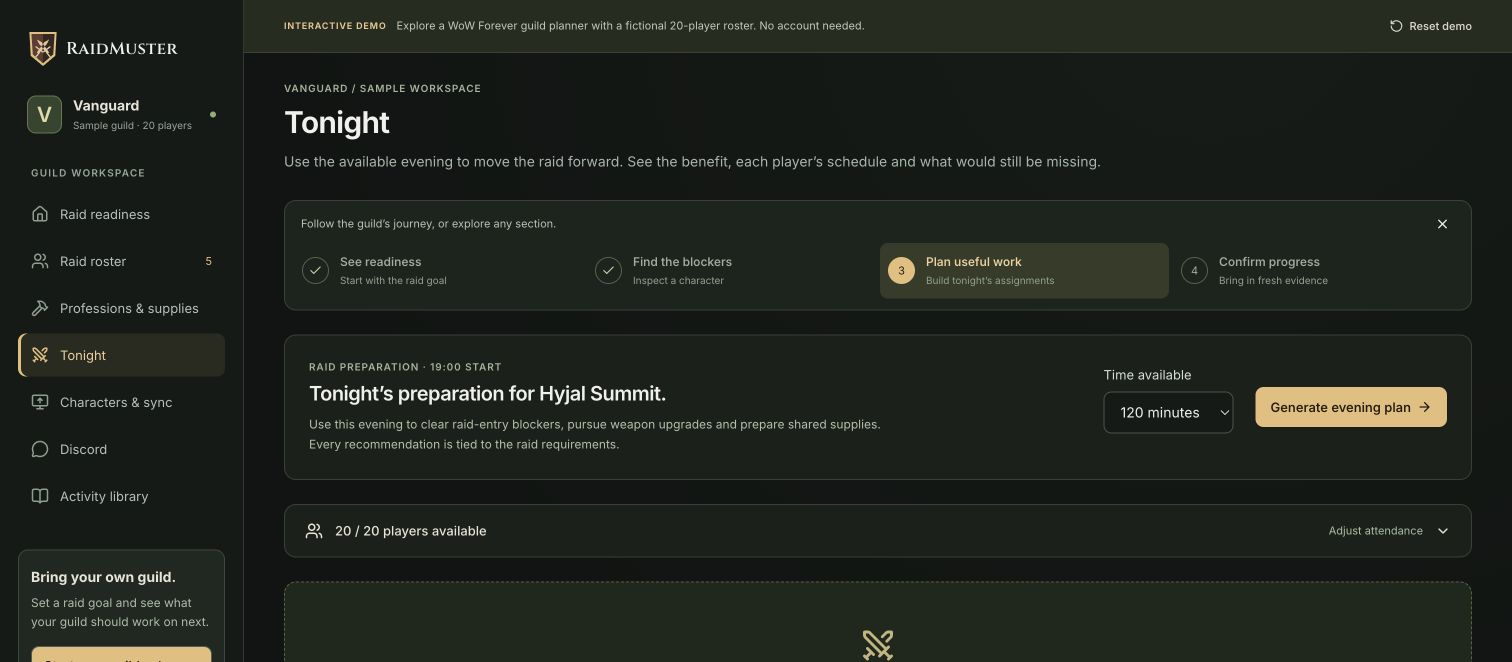
Use your guild roster to establish who intends to play and which roles they are considering. Keep temporary connection notes in your usual session notes alongside it. RaidMuster does not automatically detect beta login status or import the current queue.
If two people are interested in tanking, agree who is testing which role that evening before either starts waiting. An alternate is useful only if they know when they might be needed. Our raid-readiness overview explains how preparation and role coverage fit into longer-term WoW raid planning.
Do not convert a beta connectivity problem into a permanent roster decision. Recheck after the member can play, and keep their preferred role separate from what the group temporarily needed that night.
Does this predict November launch stability?
The transcript distinguishes beta infrastructure from production infrastructure. That is a reason to avoid drawing a direct prediction from one beta evening. It does not establish how long launch queues will be, how many players will attend or whether all launch problems have been solved.
For now, test your group’s communication and contingency plan as well as the game. After the session, note what prevented the group starting, which fallback was useful and what you would change next time. Keep current symptoms separate from the earlier incidents described above.