A fresh beta tool for coordinating Paladins
The Pals For Life author listing shows release 1.0.0 for Forever on 23 September and reported an update 25 minutes before the source snapshot checked during this review. The author says it was tested on beta build 69977. That is an author compatibility claim; RaidMuster has not independently tested the addon.
The listed features include blessing assignments for up to five Paladins, separate aura assignments, player-specific overrides and synchronisation between clients. Its planning interface therefore addresses a useful guild problem: agreeing who is responsible for which buff.
Five assignment columns are an interface limit, not a recommendation to recruit five Paladins. Choose your roster around your members and planned activity. The worksheet below is our suggested process and can be used without installing an addon.
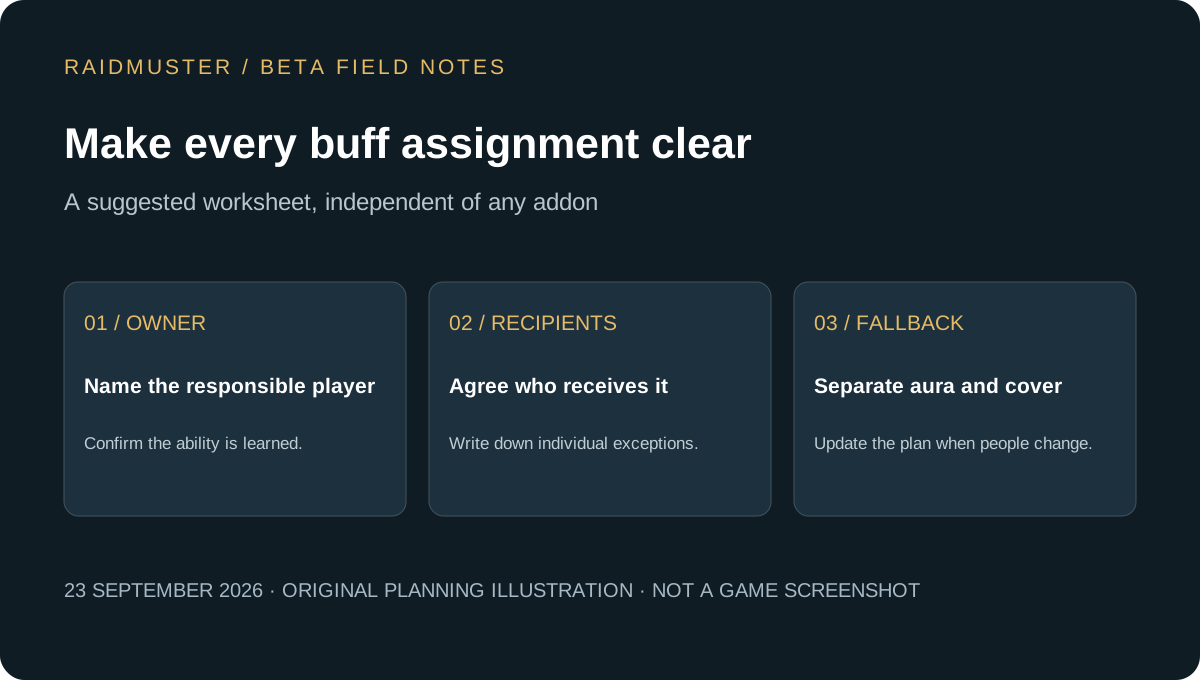
Write the assignment before the pull
Begin with the Paladins who are actually attending. Ask each player which relevant abilities they have learned in the current beta build, then agree assignments based on that answer. Do not copy an endgame template onto characters that cannot perform it.
For each assignment, record the responsible player, intended recipients, agreed blessing and any exception. Keep aura responsibility in a separate field. The purpose is to give every participant the same readable plan, not to prescribe a universal best blessing for every situation.
| Field | Example of what to record |
|---|---|
| Owner | The attending character responsible for this assignment. |
| Recipients | Named players or a clearly defined group. |
| Blessing | The agreed, learned ability for those recipients. |
| Exception | Any individual who needs a different assignment. |
| Aura and fallback | Separate aura owner; who covers an absence. |
Try the addon with a small group first
If your group wants to try it, start from the author’s project page and verify the Forever version. Let two volunteers test a simple assignment before the guild depends on it. This article does not install the addon or certify its behaviour.
The author lists Greater Blessings, seal assignment and monitoring, and a dedicated two-client in-combat rebuff test as future work. Do not describe those roadmap items as already delivered. A current feature list is also not proof that every combat situation works.
Our suggested check is to agree one assignment outside combat, compare what both players see, then change one recipient or owner and check again. Record the addon version and game build. If views disagree, fall back to the written plan and report the precise sequence to the author.
Make substitutions straightforward
Before the session, name a person who can take over an assignment if its owner leaves. Confirm the substitute has the needed ability, then tell the affected players about the change. A fallback that exists only in the organiser’s head is easy to miss.
If someone changes role or character, revisit the assignment rather than assuming the old setup still applies. Keep the number of exceptions small enough that the group can explain them. A clear two-line note often helps more than an elaborate chart nobody updates.
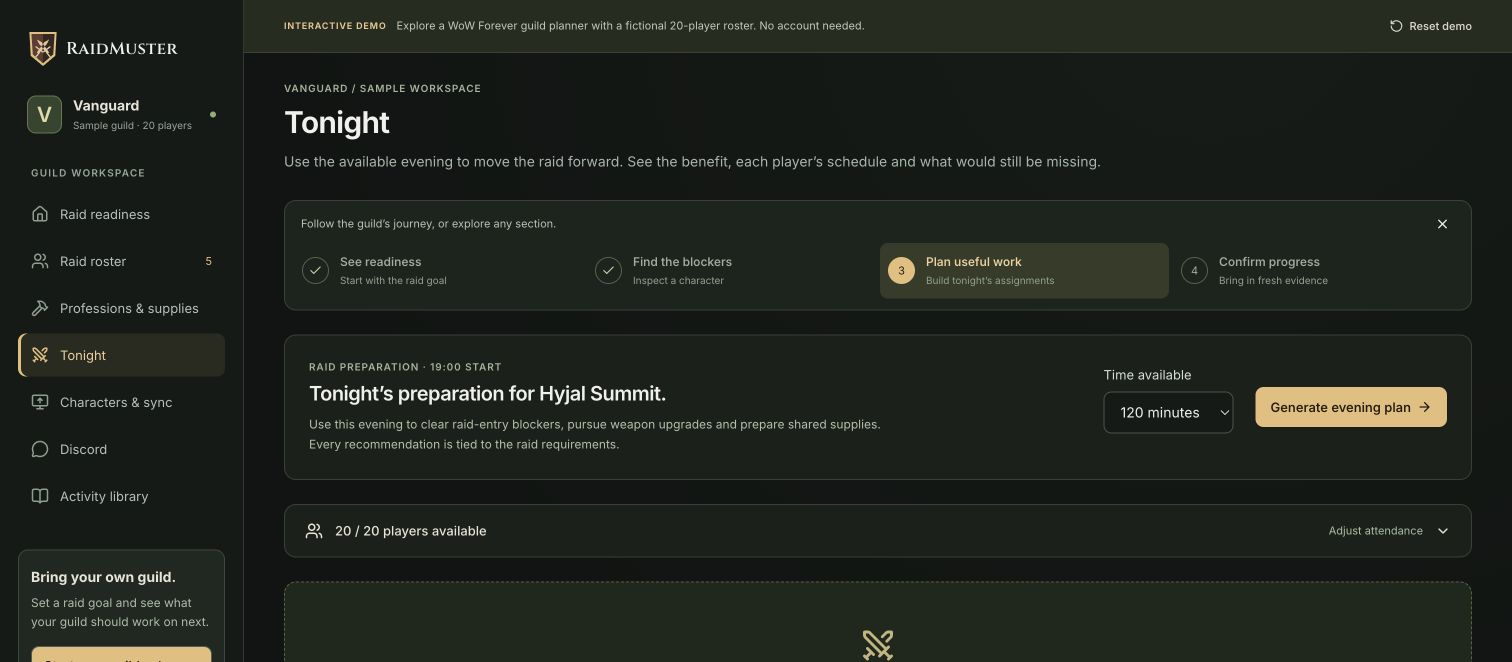
Use guild roster management to establish who is playing, and keep in-game buff execution with the players and their chosen tools. RaidMuster does not synchronise assignments with Pals For Life.
Review coordination rather than counting blame
After the test, ask three questions: did everyone know their assignment, did the substitute know when to step in, and did any interface problem hide the plan? Separate a missing ability or tool bug from a communication mistake.
Keep useful findings in your next-session notes and remove stale assignments. This creates a repeatable preparation habit for the guild while the beta is still changing.
For the larger role decision, start with our class talent guides. For recruitment, use the guild roster template rather than treating an addon’s available columns as a raid-composition rule.