What changed in today’s simulation update
MythicSim’s 23 September changelog says its Forever DPS Warrior simulations now use Recklessness during the final 15 seconds. The change applies to Quick Sim, Best Gear and refreshed Warrior rankings. This is a simulator update, not a Blizzard class-balance hotfix. The source provides a date but no publication hour, so we cannot place it precisely within the last 12 hours.
The dated reference comparison shows Arms/Fury Warrior at 743 DPS. Its method uses a fixed level-60 character, empty trinket slots and a two-minute single-target encounter. Talents and racials remain incompletely modelled or unverified. These are simulated results, not observed beta raid logs.
That distinction matters when you are building a WoW Forever raid comp. A changed cooldown assumption can alter the number even when the game itself has not changed. Read the test conditions before deciding a recruit’s class is suddenly essential.
Four checks before you share a DPS tier list
A ranking is most useful when you can explain what produced it. Before posting a screenshot in guild chat, include a link and the snapshot date. Ask whether the comparison answers the question your group is actually discussing.
| Check | Why it matters |
|---|---|
| Game change or model change? | A simulator correction does not establish a buff in the live beta. |
| Same scenario and inputs? | Gear, talents, cooldown use and encounter length can change a result. |
| What is missing? | A damage comparison cannot describe every utility or survival contribution. |
| What decision are we making? | An upgrade comparison and a recruitment decision need different evidence. |
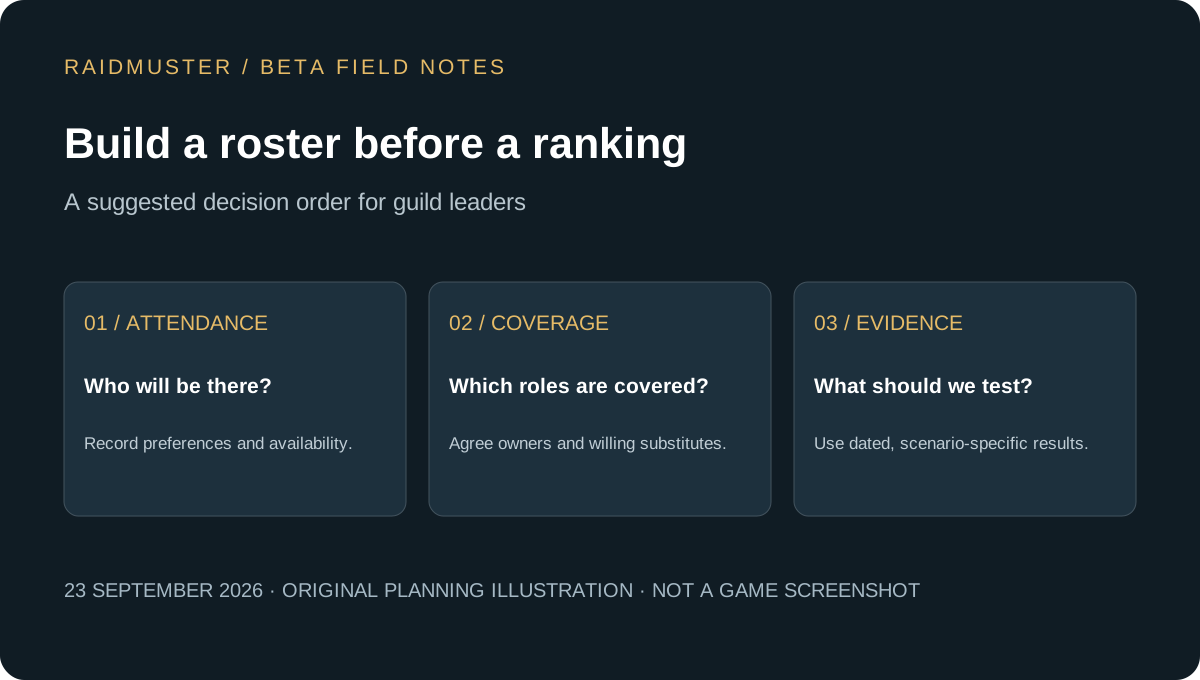
Start your raid composition with the people who can attend
Use your WoW guild roster to collect preferred roles, alternate roles and usual availability. Keep a player’s main preference separate from a temporary beta experiment. A character somebody enjoyed for an hour is not automatically their launch commitment.
Next, list the roles your planned activity requires and check which available members can cover them. Where a role has only one volunteer, ask whether another member wants to practise it. This is a coverage question before it is a damage question.
Only then use performance evidence to shape a test. For example, if two members want to compare builds, agree a shared activity, record their setup and keep notes about what each found difficult. Do not turn two different levelling sessions into a controlled class comparison.
Make a roster decision that can survive the next patch
Keep one short note beside each provisional decision: what you observed, which build or source it came from, and when you will review it. “Sam will test healing next session” is actionable. “This class will be best in November” is a prediction the present evidence cannot establish.
For a suggested small-group test, assign one person to note interruptions, one to record why attempts failed and one to confirm everyone understood their role. These observations can reveal a coordination gap that a DPS chart would miss. Keep the notes proportionate to a beta evening; the goal is a better next session.
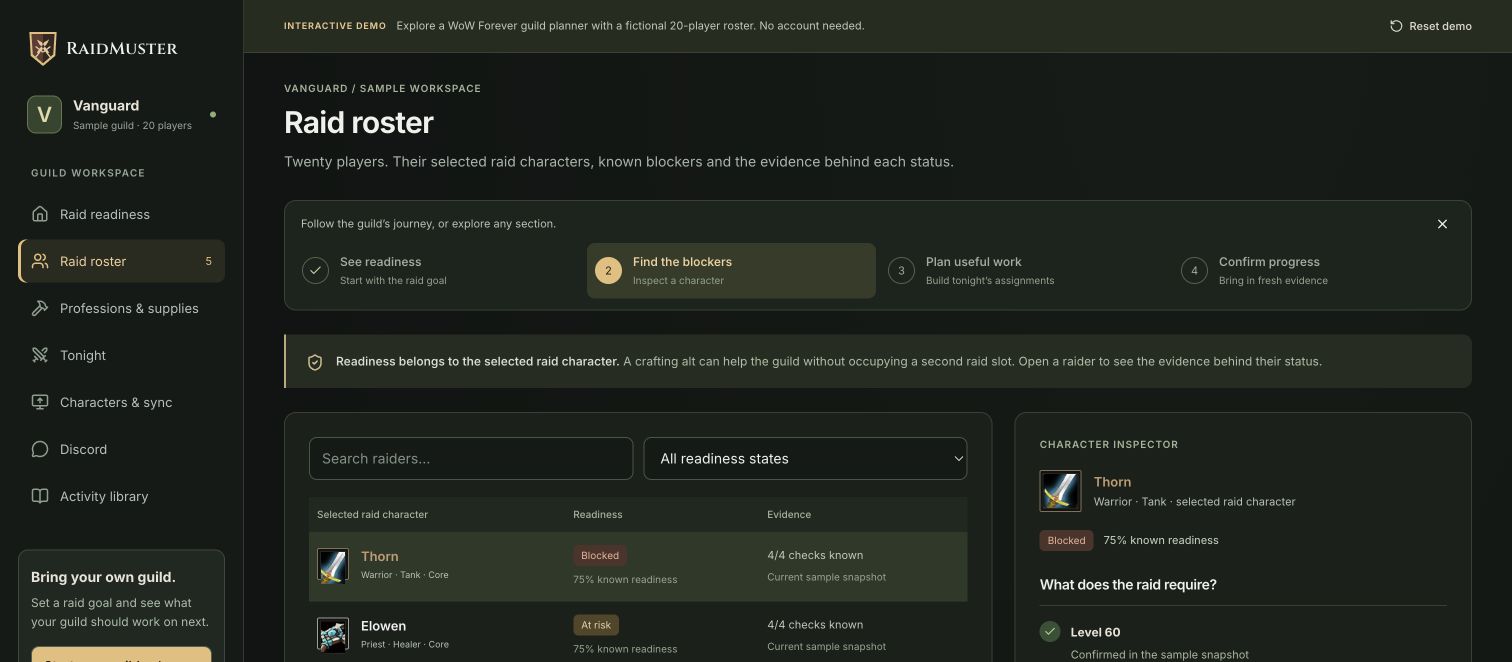
Use the raid-readiness overview to connect role coverage with preparation. RaidMuster is not importing MythicSim rankings or analysing combat logs in this workflow.
Does a beta ranking tell us the best class?
It answers a narrower question about the source’s chosen inputs. MythicSim explicitly says its tank damage table does not measure threat or survivability and does not rank healers. Its methodology is essential context for anyone comparing roles.
For class decisions, combine the nine class talent guides with your own play preferences and the roles your friends want to fill. Leave room to revise the plan when mechanics are verified or the beta changes.
Our recommendation is to use rankings to generate questions for testing, then use attendance, role coverage and repeatable observations to make guild decisions. That keeps a useful simulation from becoming an unsupported recruitment rule.