What is confirmed about Darkspear Islands?
Darkspear Islands is Forever’s new 15-versus-15 battleground off Kalimdor. Blizzard’s What’s Next recap describes controlling positions alongside flag capture and defence inspired by Arathi Basin. That establishes an objective-based match, rather than a competition decided simply by collecting kills.
This guide was checked on 1 October. It combines that announcement with extracted map artwork and a suggested guild communication exercise. It is a map preview, not a report of RaidMuster playing the battleground. For the separate ranking system, see our WoW Forever Honor guide.
Reading the Darkspear Islands map
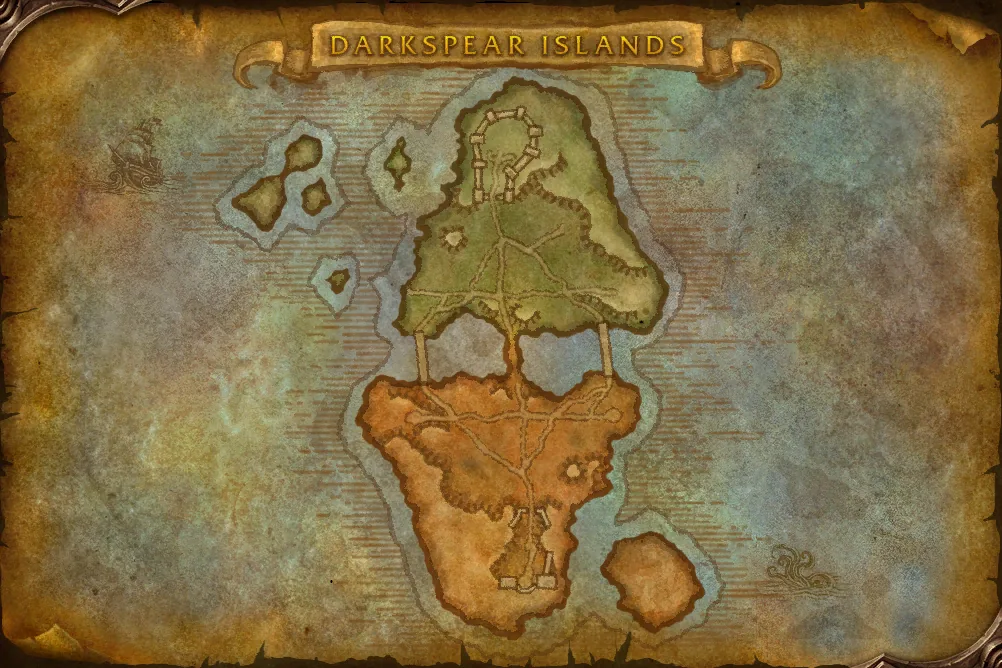
The Warcraft Forever map project publishes the game’s map artwork from client build 1.60.1.69893. The image depicts two large northern and southern land areas, three narrow connections across the middle and smaller offshore islands. Those are visual features of the artwork; walking times and usable shortcuts require playtesting.
Use the map’s north and south consistently when discussing movement. ‘Left’ changes meaning when a player turns their camera. Before proposing a crossing, check your current location and the objective you intend to reach. A line that looks short on the overview can still involve terrain or an enemy-held approach.
Learn these four place names before shortening calls
The same project lists four areas extracted from the client: Ruins, Camp, Shipwreck Cove and Abandoned Tower. The artwork above does not label their positions. Match each name to the in-game location before agreeing abbreviations; guessing which island contains ‘Tower’ creates confusion at exactly the wrong moment.
Keep the full names during your first session. Once everyone recognises them, agree any shorter forms together. Distinguish ‘Camp’, the place name, from an instruction to stay somewhere. The useful habit is saying where the situation is before describing what you need.
What level can enter the battleground?
WoW Forever Talents’ client-data listing records levels 30–60 and fifteen players per side. These are extracted queue settings, not our verification that matchmaking is currently open. Check the current beta queue before promising members a match; a team’s maximum size also does not prove that a full guild group can queue together.
A useful battleground callout has four parts
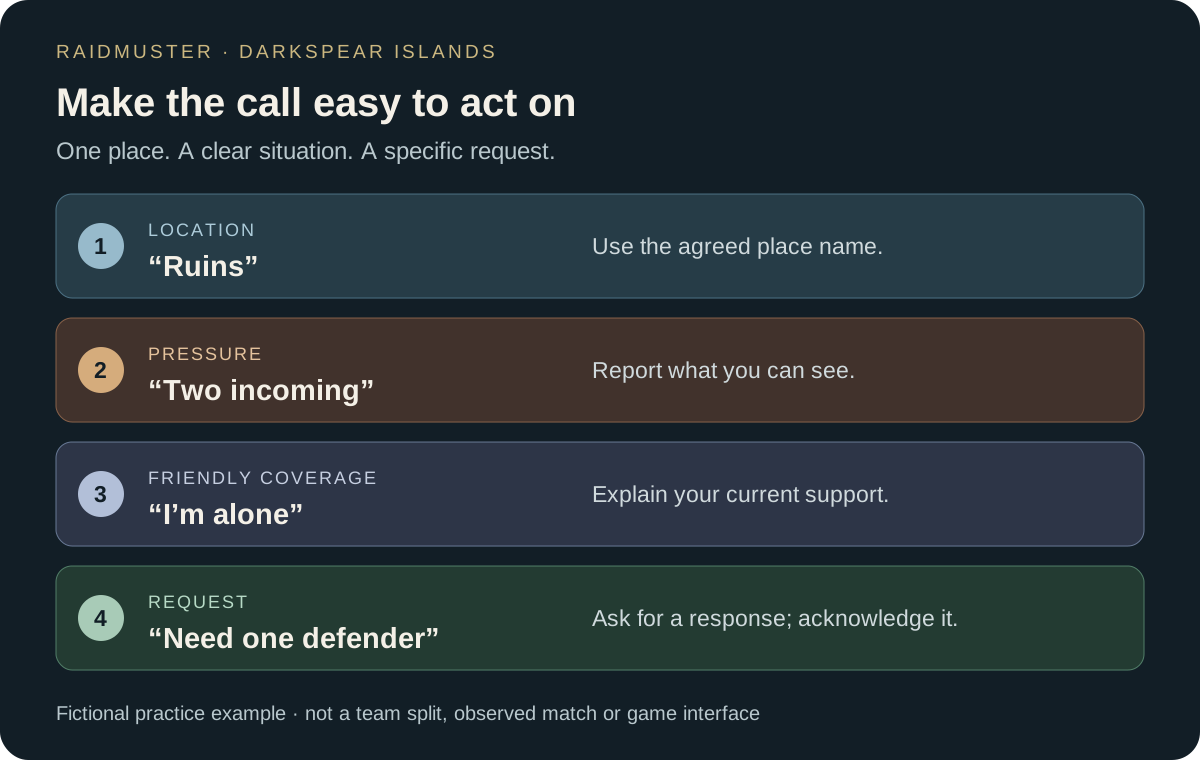
Our suggested format is location, visible pressure, friendly coverage and request. For example: ‘Ruins, two incoming, I’m alone, need one defender.’ This is a fictional practice call, not a prescribed allocation. Report what you can actually see, and say when a number is uncertain.
Have someone acknowledge a response so several players do not leave another position for the same request. If the situation changes before help arrives, update the call. A short ‘safe now’ can prevent an unnecessary rotation just as effectively as an urgent warning starts one.
What to learn in your first guild session
Before using an Eye of the Storm strategy or quoting a score target, read the actual objective interface. The sources above do not establish resource ticks, capture duration, a carried relic’s scoring or graveyard behaviour. Record those observations with the build and a screenshot so your next session starts with evidence.
- Agree one person to coordinate movement and let others report local pressure.
- Watch one objective change hands; note what the interface and score actually do.
- After a death, check where you return and which route reaches your intended position.
- Review one missed call together before changing the whole group’s strategy.
Turn map practice into a repeatable guild evening
Use your guild roster plan to identify interested members and a shared time window. Keep map notes alongside the plan, including the callouts everyone agreed. RaidMuster helps organise the people; this guide does not imply a battleground queue or live objective-tracking integration.