Can a Shaman tank a Forever beta dungeon?
Players report doing so at low levels. In September 27–28 follow-ups to a beta tanking discussion, a tester describes levelling a Shaman tank to 20 and adding their results. That supports trying a clearly advertised dungeon experiment; it does not establish a complete endgame tank role or guaranteed raid viability.
This distinction matters when recruiting. ‘I have tanked this dungeon on the beta’ and ‘I will be your launch raid tank’ are different commitments. RaidMuster checked the sources on 30 September. The developer interview discussed below is older background, not a newly announced class change.
What did Blizzard actually say about Shaman tanks?
In the GameSpot BlizzCon interview, Josh Greenfield described a more restrained starting point than Season of Discovery’s experimental class roles. PC Gamer’s 16 September coverage quotes his answer on Shaman and Warlock tanks as ‘not quite yet’, while leaving future possibilities open.
GameSpot’s own 22 September report, syndicated by Yahoo, describes the absence of a true Shaman taunt and stronger damage mitigation as current limitations. The interview does not announce a release date for a new tank specialisation. A successful player experiment also does not contradict a developer declining to promise that broader role.
What the level-20 reports establish
The tester’s expanded account describes clearing Ragefire Chasm, Ruins of Lordaeron, Wailing Caverns and Deadmines while levelling the Shaman. They credit Fire Nova with helping hold groups of enemies and describe mana pressure before later talent investment. These are one player’s observations, not controlled comparisons between tank classes.
Use that report to choose questions for your group: can the character keep enemies off the healer, recover when a target changes, and finish consecutive pulls without excessive recovery? Record the activity and level beside the answer. Holding one enemy during a forgiving pull does not demonstrate reliable control of every pack or boss.
How to organise a Shaman tank test fairly
Tell the healer and damage players what you are testing before invitations. Choose an activity the group already understands, agree a finish time and nominate a fallback if repeated pulls stop being useful. Start with familiar enemy groups so a route mistake does not obscure the role test.
Record deaths, loose enemies, recovery time and how much help the healer needed. Ask the healer for their assessment rather than judging only the tank’s damage. Save the character’s actual talents, gear and client build; a later tester needs those conditions to make a meaningful comparison.
| Record | Useful detail |
|---|---|
| Scope | Named dungeon, character level and client build |
| Role agreement | Who tanks, heals and covers a failed pull |
| Control | Which enemies changed targets and how recovery worked |
| Sustain | Healing pressure, deaths and pauses between pulls |
| Next decision | Repeat, change one variable or use the fallback |
What about Warlock tanks and Mage healers?
The same GameSpot report discusses those Season of Discovery role experiments as changes that have not carried over in that form. It is not evidence of a scheduled future spec. Keep a member’s interest in those ideas visible, but ask which currently available role they are willing to play if the hoped-for change never arrives.
Keep experiments visible without filling a raid vacancy twice
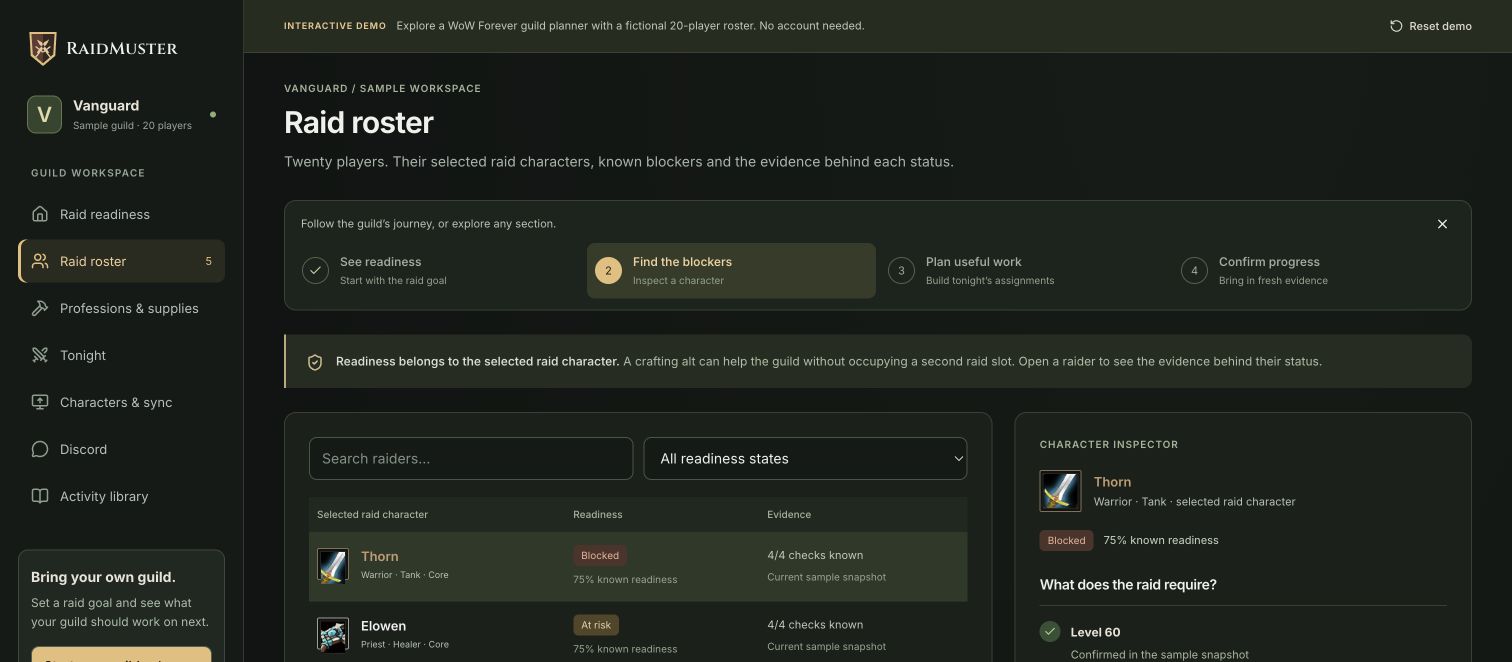
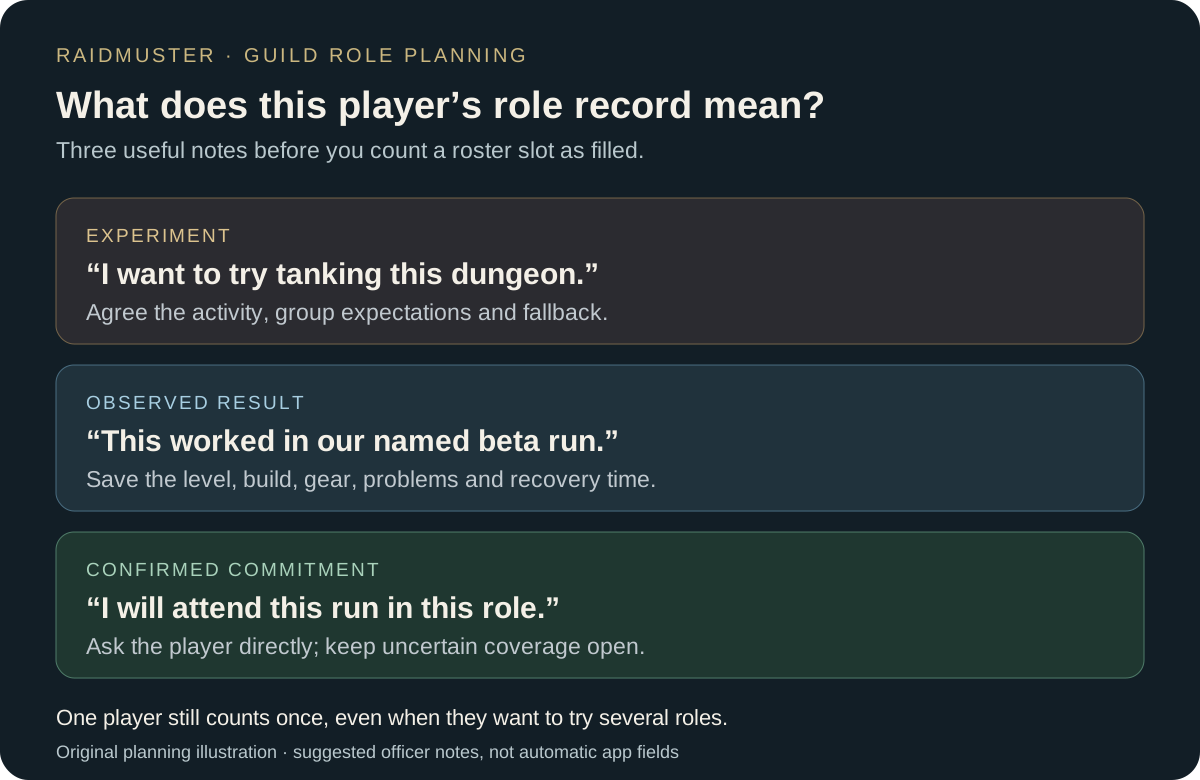
Use your guild roster plan to identify the actual person and attending character. In accompanying officer notes, distinguish an experimental dungeon assignment from the role that person has confirmed for launch. RaidMuster does not certify whether a class can tank an encounter.
For example, a player attending a Shaman tank test on Saturday still supplies one person to Tuesday’s raid plan. Confirm their Tuesday role directly. If they only want to play a future tank spec, keep that commitment unresolved and recruit for the remaining vacancy rather than treating enthusiasm as confirmed coverage.